Humans & AI
What The Human Voice Still Carries


5 minute read

MaryCatherine Jones has spent her life in the company of stories. In an age when AI can generate an entire audiobook in minutes, her work points to something easy to overlook: words do more than carry information. They help us feel, remember, connect, and make sense of our own lives.
There is a label maker on the desk in MaryCatherine Jones's recording studio in Vermont, and it is, she will tell you, her secret favorite tool. When an author says something in a session that stops her, a turn of phrase, a moment of quiet and unexpected truth, she pauses the recording, writes it down, runs it through the label maker, and puts it on the calendar on the wall behind her desk. Not as a marketing asset, not as a testimonial, but as something she wants to encounter each morning as a small and deliberate reminder of why the work matters and what it actually is.
That instinct, of caring enough to stop and capture something real, describes her better than any job title could.
Jones is the founder of The Audiobook Experience, a production company rooted in her Vermont studio but extending through a network of recording spaces across the country that allows her to work with authors closer to their own front door. Some still fly to Vermont. Others work with her through a studio near home, with Jones directing and producing remotely. And for authors who prefer professional voice talent over narrating their own work, she offers full casting and production. Whatever form the project takes, she brings the same sensibility to it: audio producer, director, recording engineer, and the rare kind of collaborator who creates the conditions where a person can be their most honest self on tape. She started six years ago with four books. This year, by June, she had forty-six in progress.
A Life in Stories
Before any of that, Jones was a reader. She will tell you that is her most essential identity, the one that precedes many others. When she was pregnant, friends asked whether she was hoping for a boy or a girl. She told them she was hoping for a reader. "Anything else is fine," she says. "As long as they read books, we're going to be good."
Her professional life has followed that love with remarkable consistency. One of her first jobs after college was at a publishing company in Vermont, where she eventually became Director of Sales and Marketing. When her children were born, she stepped away and spent years working with the Children's Literacy Foundation and doing musical story times at libraries across Vermont and New Hampshire. She then started a voiceover business, imagining herself narrating audiobooks, and found the work pointing her instead toward e-learning modules and military training content. Competent work, steady work, but not the thing she was actually after.
It was when she started recording other people that something finally settled into place. Sitting behind the glass rather than in front of the microphone, doing production work for a small company, she realized she had been building toward a specific combination all along: a genuine love of books and the ideas they carry, a set of technical skills in recording and directing, a gift for creating the conditions where someone else can be their most honest self, and an old network of publishing relationships from her Vermont years. From that recognition to The Audiobook Experience was, she says, a very short trip.
What she could not have fully anticipated was the dimension of the work that would turn out to matter most. The growth has been real. But what has stayed with her, what has shaped how she understands what she is doing, is not the volume. It is what happens when an author sits in front of a microphone and begins to speak.
In the Room
She did not fully anticipate what it would mean to be in a room with an author while they speak their own book out loud. She expected the intellectual dimension of it, the craft of shaping a performance, the technical decisions that make a recording come alive. What she did not anticipate was the emotional weight that comes from sitting with someone as they speak their whole story, in sequence, in full, in the sustained and intimate act of giving their book a voice.
"I'm just so astonished at what people have gone through," she says. There are sessions where she will stop the recording mid-chapter, not for a technical reason, but because the author has just said something that deserves more than being captured and moved past. She writes it down. She is not just recording these books. She’s experiencing them at a deeper level.
The moment that has stayed with her most across her career involves memoir authors specifically. Writing a memoir is already a form of excavation, a way of putting difficult experience into a shape that can be shared. But Jones has watched something happen repeatedly in her studio that she did not expect: a different and deeper dimension of healing that comes not from writing the story, but from speaking it.
"When the author is in the process of recording their audiobook," she says, "and actually saying those words out loud, there's a different level of healing that comes from literally speaking their story."
This is not a peripheral observation. It is confirmed by decades of research. James Pennebaker, Professor Emeritus of Psychology at the University of Texas at Austin, has spent more than forty years studying the health effects of putting experiences into words, in writing and in speech. His foundational study, conducted in 1986, found that participants who wrote about their most difficult experiences for fifteen minutes a day over four days showed measurable improvements in physical health and psychological wellbeing. Subsequent research extended those findings to talking: the act of giving language to difficult experiences, of naming what happened and how it felt, produces real and measurable benefits. The voice, it turns out, can reach places the pen or keyboard sometimes cannot.
What Jones has created is a space where that process, the one Pennebaker spent decades documenting, happens at the level of the whole book. An author who has spent months or years writing their way through something difficult now gets to speak it, in full, in the care of someone who is genuinely listening.
There is something worth pausing on here. What Jones has built is not primarily a recording service. It is a space where a person is invited to speak their most difficult truths out loud in the presence of someone who is fully paying attention. That is not a transaction that can be digitized or streamlined. It requires a human being on both ends: one person courageous enough to speak, and another present enough to hear. What her studio offers, underneath all the technical infrastructure, is the ancient and irreplaceable experience of being witnessed. The microphones and the software and the acoustic engineering exist entirely in service of that encounter. They are never the point.
The Tool vs. The Experience
Jones is not anti-AI. That is worth sitting with for a moment, because she arguably has more reason than most to be. She has spent her career doing work that sits squarely in the path of what AI is disrupting: voice, narration, production, the human sound of a story being told. Her livelihood depends on people choosing a human experience over a synthetic one. And yet she does not approach AI with defensiveness or alarm. Her position is more considered than that, and more interesting.
She uses it where it helps — research, correspondence, the background tasks that would otherwise pull her away from authors. "That helps me get to spend more time doing what I love doing," she says, "which is working directly with the authors." She is clear-eyed about where it earns its place and unsentimental about the parts where it does not.
What she does not use AI for is anything that is part of an experience. There is no chatbot on her website. No pop-up. No intake form. "You want to get in touch with me? Here's my email, here's my phone." She says this the way someone might describe the most obvious thing in the world. It is not a political statement. It is a design choice that reflects a philosophy she has lived into rather than declared.
"The ubiquity of AI in interaction," she says, "is an opportunity to do something that's very important to me, which is to have genuine connection and experience."
That is not a nostalgic sentiment. It is a strategic one. In a world where most interactions have been automated, the rare spaces where genuine human exchange is actually possible do not become less relevant. They become more so. The market, it turns out, is beginning to confirm exactly that.
A Market Speaking
The data is beginning to agree with her.
According to the Audio Publishers Association's 2026 Consumer Survey, U.S. audiobook sales reached $2.43 billion in 2025, a nine percent increase over 2024, which was itself a thirteen percent increase over the prior year. The format is one of the fastest-growing segments in all of publishing. More than 157 million Americans have now listened to an audiobook.
The more striking numbers involve AI narration. The volume of AI-narrated audiobooks has increased substantially year over year. And yet consumer willingness to try them has moved in precisely the opposite direction, falling from 77 percent in 2023 to 61 percent in 2026. Despite years of growth in AI-narrated production, those titles account for just 0.03 percent of industry revenue. More audiobooks produced by machines, chosen by fewer people willing to listen to them.
What the market seems to be discovering, through millions of individual listening decisions, is something that Jones understood intuitively: the human voice carries information that a synthesized voice does not, and listeners can feel the difference even when they cannot articulate it. The authors who come to Jones and fly to Vermont to spend days in her studio are making a version of the same bet. The audiobook is not just a convenient format. It is an experience. And experiences require a human being to be actually present for them.
As AI-generated content becomes cheaper and more abundant, the perceived value of the human original does not diminish. It rises. The same technology that enables synthetic voice has made discerning listeners more aware of what a human voice actually offers, and more willing to seek it out. The businesses that understand this, that build their entire model around the irreplaceable human dimension of what they do, are not swimming against the current. They are positioned in front of a different and more durable wave.
For Jones, that wave is not an abstraction. It shows up in her calendar, in the authors flying to Vermont, in the question she wakes up looking forward to answering.
What She Cannot Wait For
What gives Jones energy has nothing to do with strategy or market position. It is the people.
"I can't wait to see who's coming in next week," she says. Every author who walks through her door carries their own combination of courage and vulnerability, and she gets to be in the room for the moment they speak it out loud. "I get so energized by it. I get so much from the connections I make. And by that, I just mean the human connection."
MaryCatherine Jones is doing work that looks, on the surface, like it should be among the most vulnerable to AI disruption. Voices can be synthesized. Recording can be automated. And yet what she has built is growing, not because she found a clever niche, but because what she offers is something the technology cannot touch: the experience of being truly heard.
What Pennebaker's research suggests, and what Jones has observed again and again in her studio, is that the act of speaking a difficult thing carries its own kind of medicine. The voice knows things about our own story that writing alone sometimes cannot reach. In a world moving faster and more digital by the day, the analog act of speaking your own story to someone who is fully present may be one of the most human and most nourishing things a person can do.
What she has built is not really about audio production. It is about a specific kind of encounter: one person speaking something that matters, and another person being genuinely present to receive it. The authors who fly to Vermont are not just coming to record their books. They are coming for that experience — to speak their story into a real space, to feel the weight of their own words received by someone who is paying full attention.
In a moment when most conversations about AI center on what technology can produce, Jones is a quiet argument for a different kind of value. Not efficiency. Not scale. The irreplaceable experience of being truly heard. She has spent her career making that possible for others. And if you ask her what she is most looking forward to, the answer has nothing to do with the industry or the market. It is the author coming in next week.
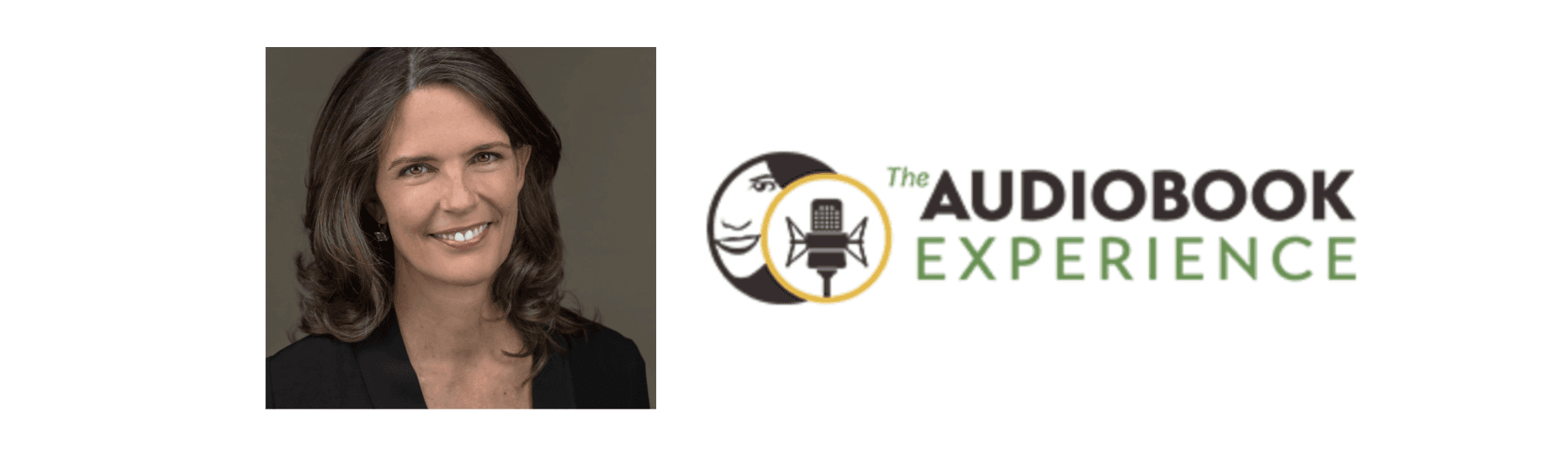
MaryCatherine Jones is the founder of The Audiobook Experience, a production studio based in Vermont specializing in author-narrated audiobooks. This conversation is part of the Humans & AI: Everyday Stories series by HumanCulture.
Sources
Audio Publishers Association. (2026, June 5). 2025 APA Sales Survey and 2026 Consumer Survey. Conducted by Toluna and Edison Research. https://www.audiopub.org/surveys
Pennebaker, J. W. (1986). Confronting a traumatic event: Toward an understanding of inhibition and disease. Journal of Abnormal Psychology, 95(3), 274–281.
Pennebaker, J. W., & Evans, J. F. (2014). Expressive Writing: Words That Heal. Idyll Arbor.
Related Stories



Let's Build a More Human Future of Work.
Whether you're exploring AI adoption, leadership alignment, or HumanCulture Membership, we'd love to learn more about your organization.