Brands Journey
The Robot Who Wanted To Feel
0 minute read
It catches a feeling in the culture before most of us have found the words for it. That is what happened for me when I first saw Lavazza’s “Pleasure Makes Us Human” campaign.
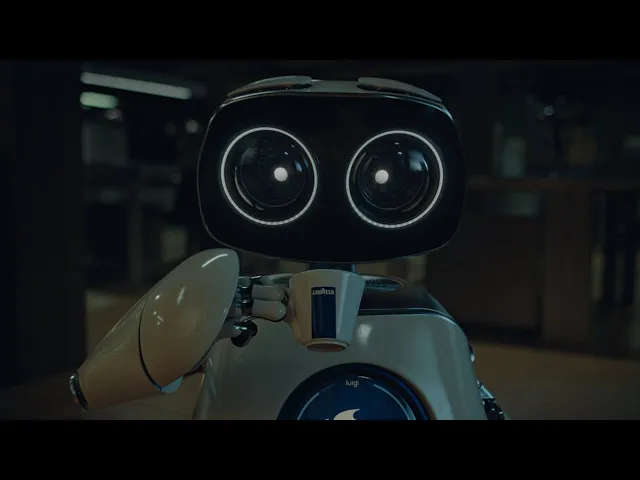
On the surface, it was charming and simple: a small robot named Luigi moves through an office serving coffee to humans. He watches them smile after a sip of espresso. He observes their delight, their ease, their little moments of connection. Eventually, he begins to imagine what it would be like to experience pleasure himself.
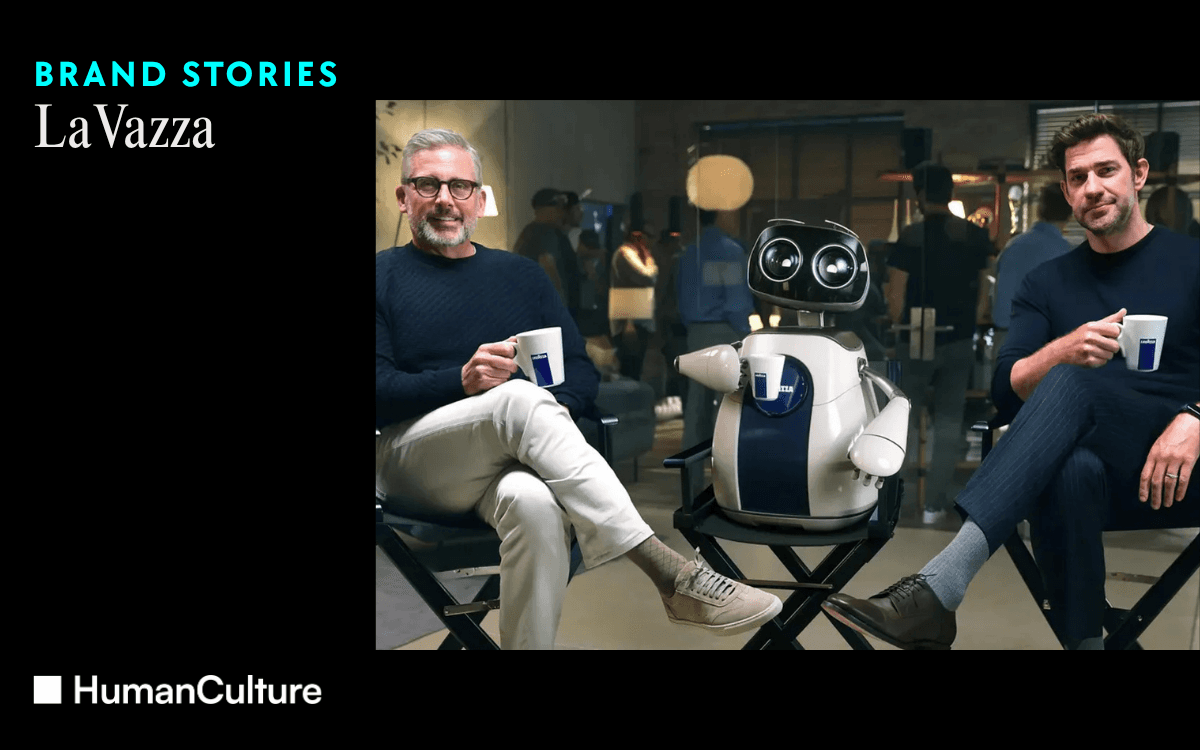
It is funny. It is sweet. It is expertly cast, with Steve Carell and John Krasinski bringing warmth and humanity to the story. But beneath the humor, the campaign carries a much deeper question — one that feels especially important right now.
In an age of artificial intelligence, automation, and endless acceleration, what makes us human?
Lavazza’s answer was not productivity. It was not intelligence. It was not output or efficiency or speed.
It’s the human ability to taste. To feel. To savor. To pause. To share a moment with someone else and recognize that something ordinary has become meaningful.
That is a remarkably human thing to build a coffee campaign around.
Lavazza — “Pleasure Makes Us Human”
When I first watched the campaign, I remember feeling two things at once. The first was delight. I loved that a brand was choosing to celebrate the human experience so directly. There was something joyful about seeing a story say, in its own playful way, that being human is beautiful. A cup of coffee was not presented as just a beverage. It became a pause, a ritual, a doorway back into our senses.
But I also felt anxious.
Because if we are living in a moment where we need to remind ourselves of our human-nature, then perhaps we are also living in a moment where the things that make us uniquely human is at risk of being forgotten.
That was the part that stayed with me.
The campaign did not portray Luigi as threatening. He was not a villain. He was curious, innocent, almost tender. He could serve the coffee. He could observe the ritual. He could move through the workplace and participate in the function of the moment. But he could not access the feeling of it.
That distinction felt important then, and it feels even more important now.
The future does not need to be framed as humans versus machines. That is too simplistic, and frankly, not very helpful.
The more important distinction may be between function and experience. A machine may be able to complete a task, generate an answer, produce an image, recommend an option, or optimize a process. But the human experience is not only functional. It is sensory, emotional, relational, moral, creative, and deeply embodied.
We do not simply move through the world completing tasks. We taste. We laugh. We remember. We long. We hesitate. We make meaning. We hold values. We feel joy, grief, beauty, frustration, wonder, and love. We sit across from another person, cup in hand, and sometimes the smallest moment becomes the thing that brings us back to ourselves.
That is what Luigi cannot reach.
And that is what the campaign helped me see more clearly.
At the time, I was beginning to ask the questions that would eventually become HumanCulture.

I was thinking about the future of work, the rise of AI, the fragility of connection, and the growing need for organizations to remember the human beings inside their systems. I was trying to understand where I wanted to spend my energy in a world that seemed increasingly captivated by speed and scale.
Then this little robot appeared on screen, longing for the one thing humans almost forget they already have.
That image became strangely foundational for me.
HumanCulture was built around a simple conviction: the human element is the greatest element in any culture or society.
That idea is reflected in the logo itself, which is designed in reference to the periodic table of elements. It is a visual reminder that while organizations are made of strategies, systems, technologies, processes, and products, the most essential element is still the human one.
In the workplace, that human element shows up as judgment, discernment, creativity, intuition, intellect, emotional intelligence, values, relationships, courage, and care. It is our ability to understand context, to make meaning, to build trust, to imagine what does not yet exist, and to decide not only what can be done, but what should be done.
Those things matter in culture. They matter in society. They matter in the workplace. And as technology becomes more capable, they will not matter less. They may matter more.
That is why Lavazza’s campaign felt so powerful to me. It was not anti-technology. It was not afraid of the future. It simply placed a robot beside a human ritual and allowed the contrast to speak for itself.
The robot could serve.
The humans could savor.
The difference was the story.
And maybe that is the deeper invitation for all of us.
As AI becomes more present in our lives and work, we will need to become more intentional about the parts of the human experience we choose to protect, practice, and elevate.
Not because technology is bad, but because technology is not enough to define a meaningful future.
A future built only around efficiency will be fast, but thin. A future built only around intelligence will be powerful, but incomplete. A future built only around automation may remove friction, but it may also remove some of the moments where people feel most alive.
The better future is not less technological. It is more human.
It is a future where we use tools to expand human possibility, not diminish human presence. It is a future where organizations ask not only how to optimize work, but how to deepen trust, creativity, belonging, and purpose. It is a future where brands do not simply compete for attention, but create moments that remind people what it feels like to be seen, known, delighted, and alive.
That is the future I want HumanCulture to help build.
And in some small but meaningful way, Lavazza helped me name it.
In my early days of forming HumanCulture, I wrote a question that still feels central to this work:
When was the last time your heart was truly filled with joy?
Not entertained for a second. Not distracted. Not stimulated. Actually filled.
My guess is that, for most of us, the answer is probably tied to an experience with another human being. A meal. A conversation. A laugh that went longer than expected. A quiet moment with family. A place that made us feel alive. The feeling of being known, welcomed, or loved.
That does not make technology irrelevant. It simply reminds us what technology is not.
Technology can support the human experience. It can help us create, connect, learn, organize, and imagine. But it should not quietly train us to forget the value of what cannot be reduced to speed, scale, or efficiency.
A little robot wanted to taste coffee. He wanted to know what pleasure felt like. He wanted access to the thing humans almost forget they have.
And in watching him want it, I was reminded of the work ahead.
To prioritize the human element. To elevate it. To help organizations, brands, leaders, and cultures remember that the future should not merely be more intelligent, more automated, or more efficient.
It should be more human,
That is the future HumanCulture believes in.
Related Stories





Let's Build a More Human Future of Work.
Whether you're exploring AI adoption, leadership alignment, or HumanCulture Membership, we'd love to learn more about your organization.